
Natural Stone vs man-made Stone: What's Actually the Difference?
A guide to understanding your benchtop options — and why the conversation has changed for good.
If you're planning a kitchen or bathroom renovation, you've probably come across the terms "natural stone" and "man-made stone" more than once, often without a clear explanation of what actually separates them. It's a more important question than it used to be. The material landscape shifted permanently in Australia from 1 July 2024, when engineered stone ie the manufactured "quartz" product that had dominated benchtops for over a decade was banned outright due to the risk of silicosis among fabricators. Two years on, porcelain, sintered stone and natural stone have become some of the main alternatives, but the choice is more nuanced than simply replacing engineered stone with another manufactured surface. It is worth noting that ‘not banned’ does not mean ‘silica-free’: porcelain, sintered stone and many natural stones can still contain crystalline silica, so fabrication and installation need to be carried out using appropriate controls.
It's not a one-size-fits-all decision and we don't treat it as one. At Prince Albert, we specified granite for its durability and low-key maintenance. At Exeter, the brief called for real natural character, so we chose Taj Mahal quartzite and at Middle Head Road, porcelain was the right fit for a low-maintenance, high-performance surface for the kitchen island. Each of these was a considered choice based on the specific project, the client's lifestyle, the design direction, budget and how the space is actually used day to day. There's no default material at Cloth + Stone; the right answer changes with every brief.
What "man-made" means now
Before the ban, it almost always meant engineered stone: crushed natural quartz bound together with resins and pigments to create a consistent, low-maintenance surface. That option is no longer legally available in Australia and it can't be manufactured, supplied, processed, imported or installed. If you have engineered stone already installed, it's not required to be removed; Safe Work Australia has confirmed installed product poses no risk while undisturbed. But it's no longer part of the conversation for new projects.
A short transitional window applied to contracts signed before 31 December 2023, allowing installation to continue until the end of 2024 but for any project starting now, engineered stone simply isn't on an option.
In its place, porcelain and sintered stone have become the primary manufactured alternative. These are fired at high temperature from natural minerals with no resin binder, which means no sealing is required and they handle heat and UV exposure without issue. For homeowners who want a genuinely low-maintenance surface, porcelain is a strong, practical option.
Where porcelain shows its manufactured origins is in versatility. Where porcelain can differ from natural stone is in the way the pattern behaves at edges and cut-outs. On some products, the veining is printed onto the surface rather than running through the body of the slab, so it's worth checking an actual sample particularly if you're planning a mitred edge or undermount sink. Full-body porcelain options have improved this considerably
What natural stone offers instead
Natural stone; quartzite, granite, dolomite and marble in particular have absorbed much of the design appetite that engineered stone once satisfied, and in some respects it does the job better.
Quartzite is a genuinely hard, durable material formed from sandstone under intense heat and pressure. It delivers the marble-like movement people love, with considerably more durability than actual marble. The terminology can also be confusing. Some stones marketed as quartzite are actually dolomitic marble or other carbonate-based stones, which can behave quite differently when exposed to acids. Asking for the geological classification, rather than relying solely on the trade name, is therefore important.
Granite is the most forgiving of the natural options. It handles heat directly, resists etching from everyday acids far better than marble, and takes daily kitchen use without much complaint. It still benefits from sealing, though less frequently than marble.
Dolomite sits somewhere between marble and quartzite in terms of hardness and durability, but it is still a natural stone and should be treated accordingly. It can offer the soft, luminous veining clients love in marble, while generally providing greater resistance to scratching and etching. However, dolomite is not as hard or as resistant as true quartzite, so understanding exactly what you're buying rather than relying on the name used in a showroom is important.
Marble remains the classic choice for its veining and depth of character, though it's the softest and most porous of the group and needs the most consistent care.
On the Mohs hardness scale, the standard measure of scratch resistance, running from 1 (talc) to 10 (diamond) quartzite typically sits around 7, granite averages around 6.5, and marble falls to roughly 3–4. That gap in hardness is a large part of why marble scratches and etches more readily in daily use than granite or quartzite. The difference in hardness is significant: quartzite is generally much harder than marble, while granite sits somewhere between the two. That difference is one reason marble is more susceptible to scratching and surface marking in everyday kitchen use
The real difference in how you specify
One distinction is easy to overlook: manufactured surfaces like porcelain are a product decision. You choose a sample and what arrives matches it. Natural stone is a slab-by-slab decision — the next slab cut from the same quarry block can look noticeably different from the one you approved. For a kitchen where continuity matters across an island and a splashback, that means identifying and reserving the actual slab at the point of order, not just nominating a stone type and hoping for the best.
So which is right for your project?
There's rarely a single correct answer, but there are useful rules of thumb:
Quartzite suits a working kitchen where the client wants natural material and real character, provided the sealing conversation happens early.
Granite is the better call when a project genuinely can't afford maintenance sensitivity.
Dolomite can be a beautiful choice when you want the soft, luminous movement of marble with a little more hardness and durability, but it still requires care and should not be treated as maintenance-free.
Porcelain earns its place when the brief is maintenance-led above everything else although it's worth viewing an edge detail in person first.
The wrong choice is rarely a specific material. It's usually a decision made from a photo, without anyone checking how the stone actually behaves in the room it's going into. That's the conversation we have with every client before a single slab is chosen.
We look at how the space will be used, how much maintenance a client is comfortable with, the architectural character of the home, the overall palette and importantly, the actual slabs available before making a recommendation.
Because the most beautiful stone isn't necessarily the right stone for every home.
At Cloth + Stone, material selection is part of how we design and not an afterthought once the layout is finished. If you're weighing up natural stone against a manufactured alternative for your renovation, we'd love to talk through what's right for your project.
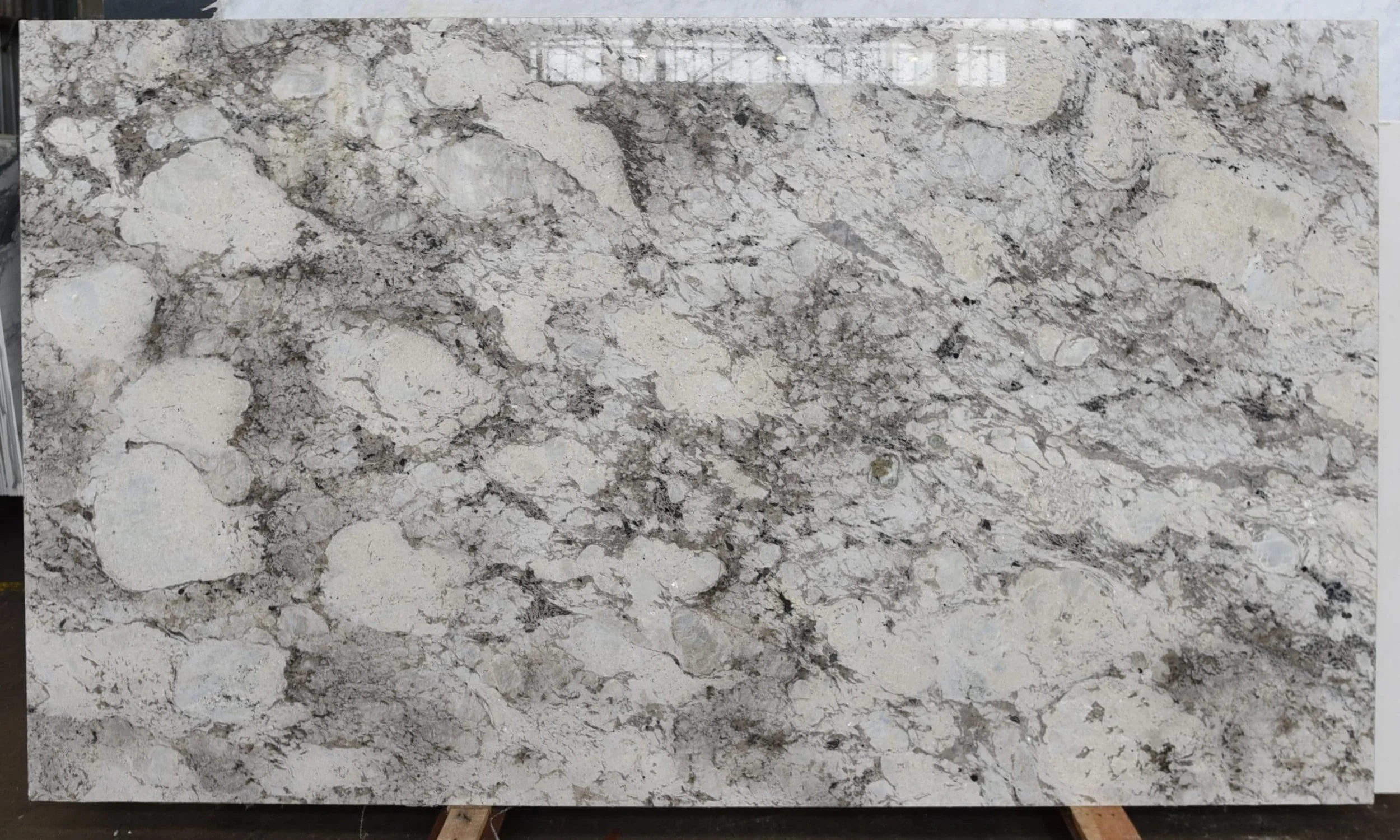
Selected granite slab, Colonia White.

Prince Albert Street Kitchen.